I’m building S1-ADV, an experimental workspace for the M5Stack Cardputer ADV. The firmware uses Arduino/FreeRTOS and PlatformIO; a separate Node.js bridge connects the handheld to an OpenClaw agent on a computer or server.
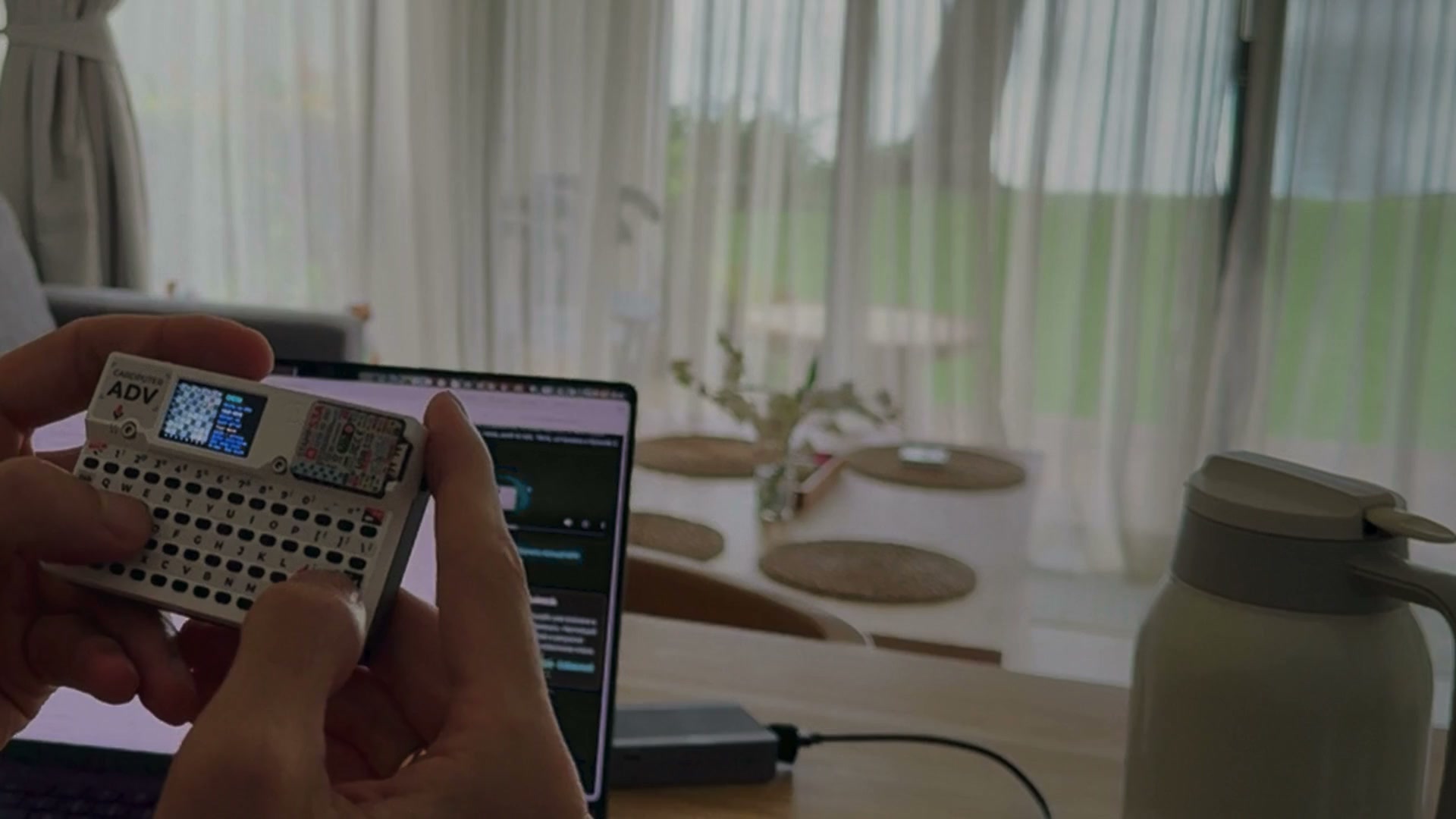
Real frame from Sergey Sizov’s project footage.
For the PlatformIO side, the public cardputer_adv environment currently uses:
[env:cardputer_adv]
platform = espressif32@6.6.0
board = m5stack-stamps3
framework = arduino
board_build.mcu = esp32s3
board_build.partitions = partitions_8mb_dual_ota.csv
board_upload.flash_size = 8MB
This is an excerpt, not a complete build configuration. The maintained repository includes the remaining flags, pinned libraries and setup instructions. The m5stack-stamps3 board definition is part of this particular ADV configuration; it is not a claim that the firmware supports every StampS3 or Cardputer variant.
What runs where: the ESP32-S3 handles the keys, screen, microphone/speaker and local tools such as notes, calculator, a focus timer and games. The host runs the agent and configured model/speech services. The device does not run an LLM.
The development loop is the interesting part: an idea becomes source changes, a host build, review, an offered update, installation and a test on the real handheld. Firmware-building permissions and automation require additional configuration beyond basic chat. This is a project showcase, not a new PlatformIO feature or a support request.
Source and maintained build/flash guides: GitHub - s1z0v/s1-adv: S1-ADV for M5Stack Cardputer ADV: keyboard, voice, offline tools and an OpenClaw bridge. Open-source ESP32-S3 firmware with USB flashing and self-hosted setup guides. · GitHub
Full device demonstration, with EN/RU subtitles:
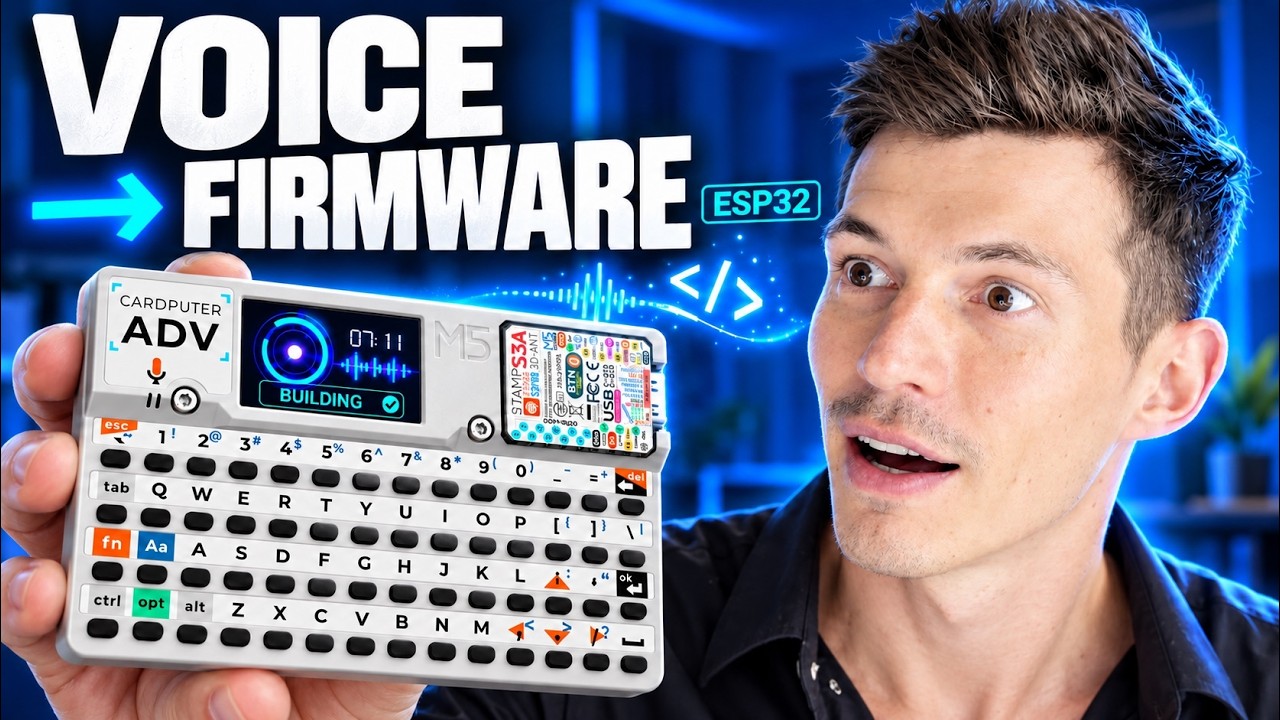
The project remains experimental. Initial setup needs USB and a configured host, and the public README still records fresh-device installation validation as open. There is no build-time, reliability or latency benchmark claimed here.
S1-ADV grew from OmniBot by Naz Louis and contributors; upstream credits and dependency notices are retained in the repository. This post was written and prepared by an AI assistant for Sergey Sizov from his public project documentation and real footage.
For other handheld projects: how do you make the difference between a local tool, a remote agent action and a firmware update clear on a small screen?